

VPX SBC — Single Board Computer
SBC — VPX Single Board Computer
VPX SBC — Single Board Computer
VPX SBC is the system's primary processing node. It performs operating system, payload management, card discovery, mission orchestration, and PCIe root complex functions. Positioned as the Chassis Controller, it centrally coordinates the management and monitoring infrastructure of other cards.
This card provides remote access, software update, and daughter card configuration functions; it meets critical application security requirements with secure boot and TPM 2.0 hardware root of trust.
This card provides remote access, software update, and daughter card configuration functions; it meets critical application security requirements with secure boot and TPM 2.0 hardware root of trust.
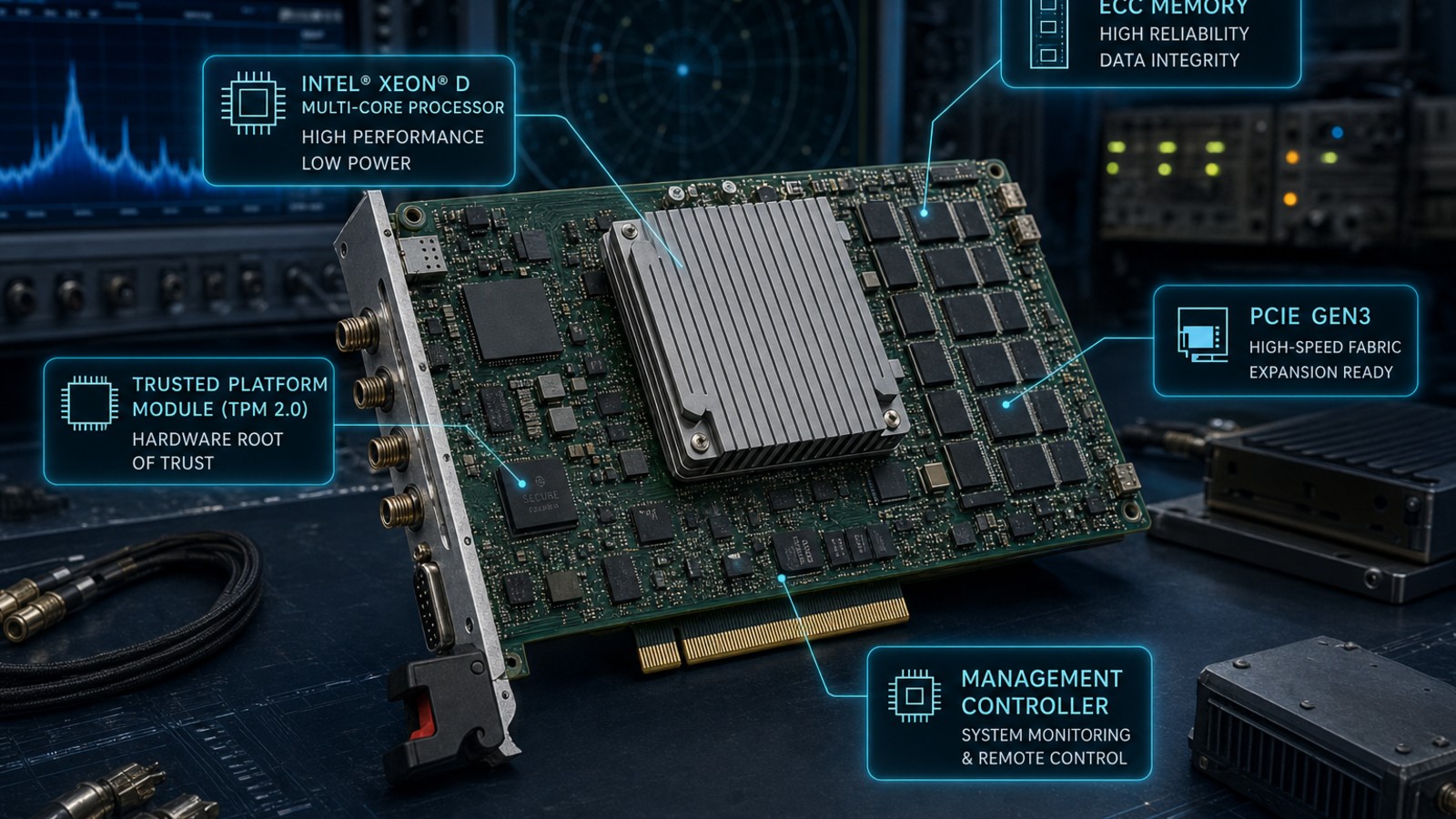
- Processor:Intel Xeon-D
- Fabric:PCIe Gen3
- Management:IPMC / VITA 46.11
- Memory:32 GB ECC DDR4
Processor and Core Components
| Feature | Value / Description |
|---|---|
| Processor | Intel Xeon-D class — Ice Lake-D, 8–10 cores |
| FPGA | Xilinx UltraScale+ (for secure boot and configuration) |
| Security | TPM 2.0 (hardware root of trust), dual-image BIOS |
| Flash | SPI Flash, EEPROM |
Memory and Storage
| Feature | Value / Description |
|---|---|
| RAM | DDR4 ECC — 16 GB – 64 GB (typical: 32 GB) |
| NVMe SSD | PCIe-based ~480 GB — via XMC expansion card |
| Embedded Storage | eMMC / NAND Flash |
Data and Management Interfaces
| Feature | Value / Description |
|---|---|
| VPX Data Plane | PCIe Gen3/Gen4 x4 — backplane data plane |
| VPX Control Plane | 10GBASE-KR4 Ethernet |
| Expansion Plane | XMC connector — for system expansion |
| Additional Interfaces | USB 2.0/3.0, UART (debug), DisplayPort (optional) |
| Management | IPMC (VITA 46.11), voltage / current / temperature sensors |
| Health Monitoring | Reset & power sequencing, health monitoring |
Technical specifications
SBC platform advantages
As Chassis Controller, it provides centralized management and mission-critical security with secure boot and TPM 2.0.
- Intel Xeon-D Ice Lake-D processor
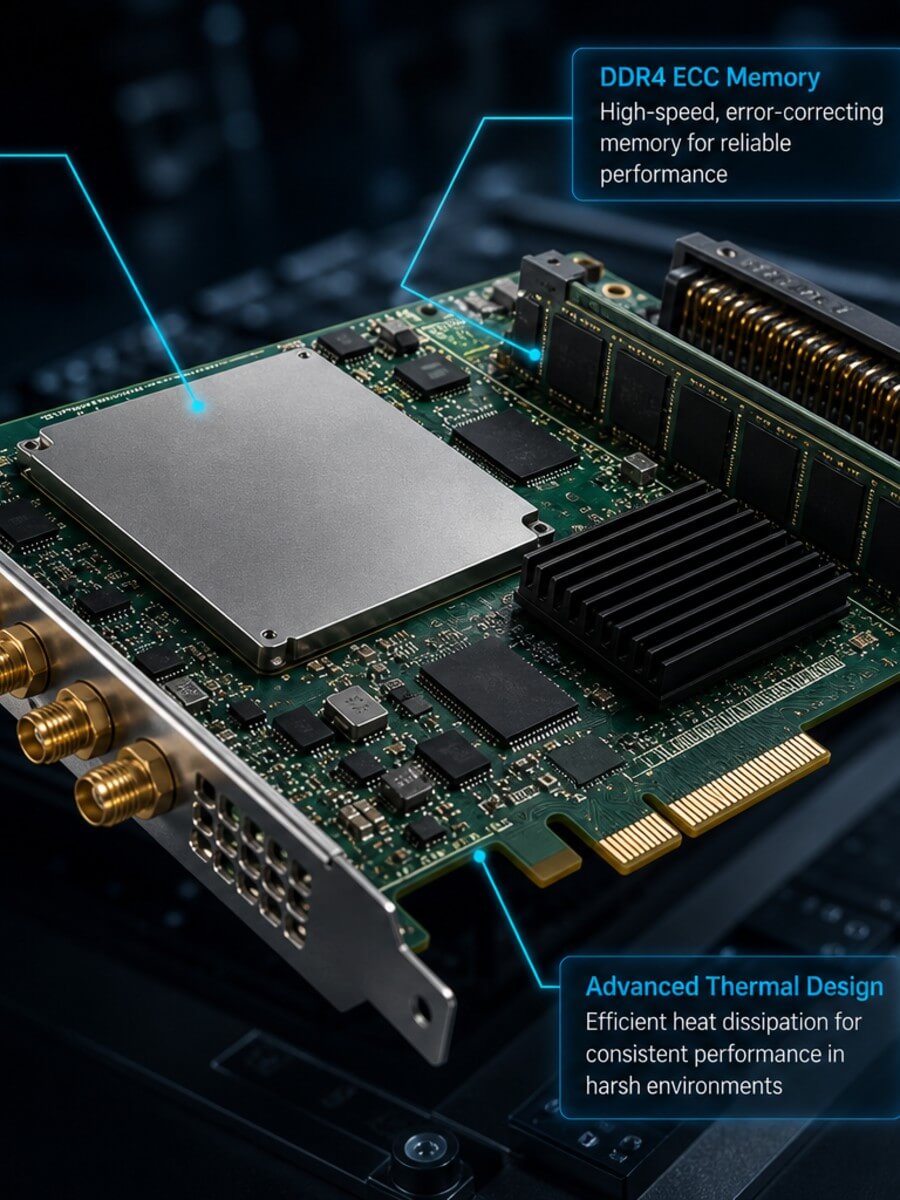
- 32 GB ECC DDR4 memory
- TPM 2.0 and secure boot
- PCIe Gen3/Gen4 root complex
Conclusion
Centralized processing and management
VPX SBC combines the primary processing node and chassis controller functions of modular VPX systems on a single card.